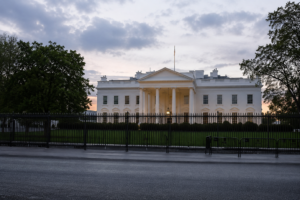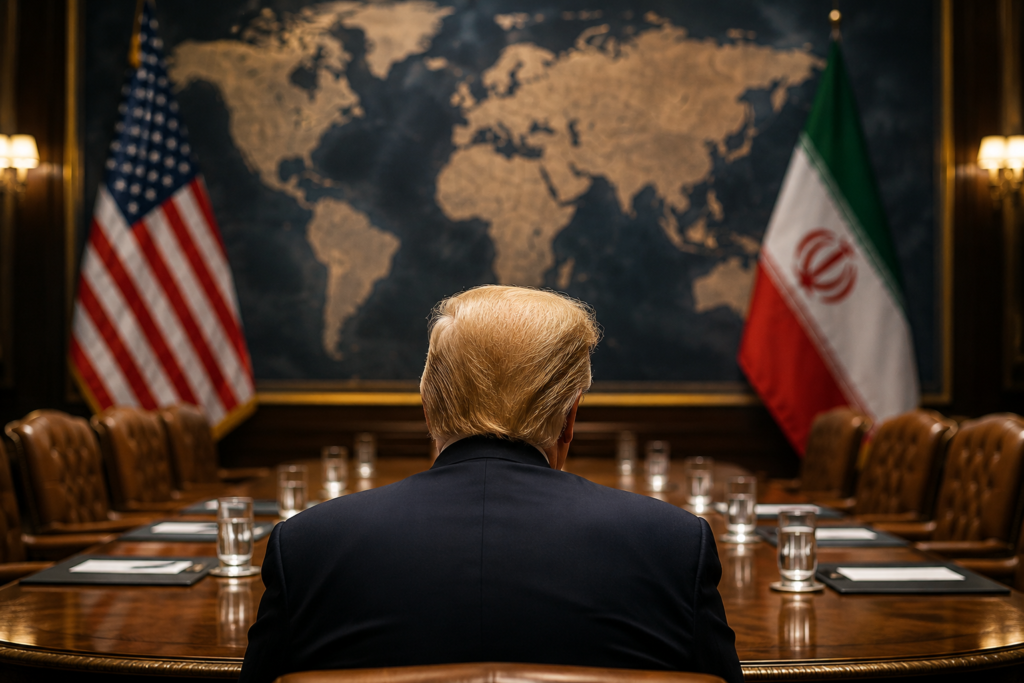
President Donald Trump pushed back forcefully against mounting criticism of his administration’s ongoing nuclear negotiations with Iran on Monday, insisting that critics are attacking a deal that does not yet exist — and warning that any agreement he reaches will be categorically different from the one struck by his predecessor.
“They are attacking a deal that isn’t even fully negotiated yet,” Trump wrote in a lengthy statement released through the White House communications office. “If I make a deal with Iran, it will be a good and proper one. I don’t make bad deals.”
The statement marked one of Trump’s most direct public defences of the Iran talks since negotiations began, and came amid growing pressure from hawkish voices within the Republican Party who have argued that any diplomatic engagement with Tehran represents a strategic error.
Obama Deal Still in Trump’s Crosshairs
Central to Trump’s statement was a sharp attack on the 2015 Joint Comprehensive Plan of Action — the nuclear agreement negotiated under President Barack Obama — which Trump characterised as a catastrophic failure that empowered Iran rather than constrained it.
Trump claimed the Obama administration handed Iran “massive amounts of CASH” and effectively enabled the country’s nuclear ambitions rather than curtailing them. The reference was to the $1.7 billion in cash payments made to Iran in January 2016, which the Obama administration said represented the settlement of a decades-old financial dispute over a failed arms deal predating the Iranian Revolution. Critics at the time and since have argued the timing — coinciding with the release of American prisoners held in Iran — amounted to a ransom payment Tehran used to fund regional military operations.
Trump formally withdrew the United States from the JCPOA in May 2018, describing it as “the worst deal ever negotiated.” His administration subsequently reimposed sweeping economic sanctions on Iran under a maximum pressure strategy that drove the Iranian economy into severe contraction but failed to bring Tehran back to the negotiating table on American terms during his first term.
A Different Kind of Negotiation
The current talks represent a significant departure from the maximum pressure approach. The White House has confirmed that US and Iranian negotiators have been meeting in Muscat, Oman, with Pakistan serving as an additional back-channel intermediary. The discussions are understood to cover Iran’s uranium enrichment programme, the future of its ballistic missile development and the possible release of American citizens currently detained in Iran.
Trump’s insistence that any deal will be “good and proper” reflects the enormous political stakes attached to the outcome. His base includes a significant constituency that views any diplomatic engagement with Tehran as capitulation — but Trump has also repeatedly signalled, going back to his first term, that he sees deal-making with Iran as both possible and desirable if the terms are right.
The framework that has reportedly emerged from early discussions differs substantially from the JCPOA in its structure. Rather than a multilateral agreement involving the European powers, Russia and China, the current negotiations appear to be proceeding on a bilateral US-Iran basis — which gives Washington more direct leverage but also removes the international verification architecture that gave the JCPOA some of its technical credibility.
Regional and Market Reaction
The statement landed against a backdrop of continued tension across the Gulf region. Oil prices have remained elevated above $100 per barrel as traders price in the risk of disruption to Strait of Hormuz shipping lanes — through which approximately one-fifth of the world’s seaborne oil supply passes — in the event that talks collapse and military options return to the table.
Gulf states including Saudi Arabia and the UAE have been watching the negotiations with a mixture of hope and anxiety. Hope because a durable diplomatic resolution to Iran’s nuclear programme would reduce the existential threat they have lived with for decades. Anxiety because any deal that leaves Iran with significant enrichment capacity and sanctions relief could accelerate Tehran’s regional ambitions in Yemen, Lebanon, Iraq and Syria.
Israel’s position remains categorically opposed to any agreement that leaves Iran’s nuclear infrastructure intact. Prime Minister Benjamin Netanyahu has privately communicated to Washington that Israel will not accept a deal that permits Iran to retain enrichment capability above a minimal threshold — a position that analysts say is increasingly difficult to reconcile with what Iran has indicated it will accept.
What Comes Next
The immediate diplomatic calendar is dense. A further round of talks in Muscat is expected within days. The International Atomic Energy Agency is scheduled to release its latest assessment of Iran’s enrichment activity — reports indicate Iran has continued accumulating uranium enriched to 60 percent purity, within technical striking distance of weapons-grade material, even as negotiations proceed.
Trump’s Monday statement was read by analysts as an attempt to manage domestic political expectations while keeping the negotiating channel open. By attacking the Obama deal rather than defending concessions in the current framework, Trump is simultaneously reassuring his base that he approaches Tehran from a position of strength and preserving the flexibility he needs to reach an agreement that his critics — whoever they are — have not yet seen.
Whether that agreement materialises, and what it contains, will shape the security architecture of the Middle East for a generation.
GlobeBuzz will continue tracking the Iran nuclear negotiations as they develop.
Follow @globebuzz_org on X and Telegram for live updates.