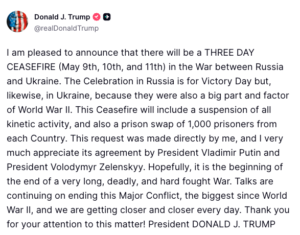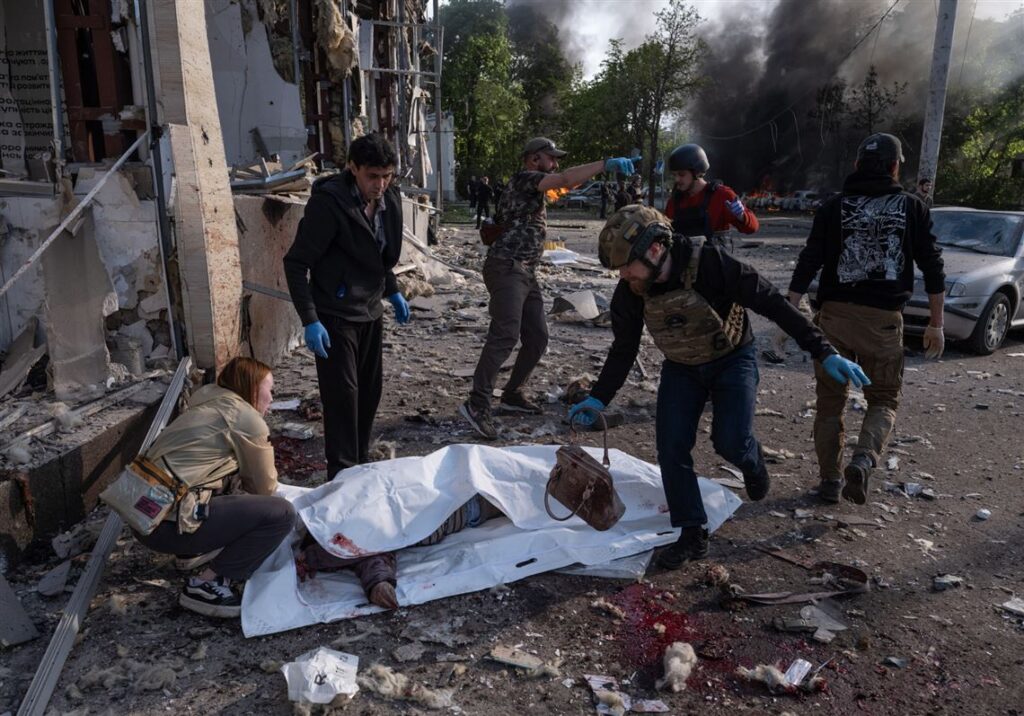
Russian forces launched deadly strikes across multiple Ukrainian cities on Tuesday, killing at least 22 people just hours before Moscow’s self-declared Victory Day ceasefire was set to begin. Ukrainian President Volodymyr Zelensky condemned the attacks as a stark demonstration of Russia’s “utter cynicism” — launching lethal bombardments while simultaneously proposing a pause in hostilities to mark the 81st anniversary of the Soviet Union’s victory over Nazi Germany. The strikes hit residential areas in Zaporizhzhia and Kramatorsk, causing significant civilian casualties and widespread destruction. Emergency services worked through the night to recover victims from rubble as the death toll climbed. ## Zelensky Slams Kremlin Timing Speaking from Kyiv, Zelensky did not hold back. The Russian attacks, he argued, reveal the true nature of Moscow’s ceasefire proposal — a temporary propaganda measure designed to allow Victory Day celebrations, not a genuine step toward peace. Ukraine has been targeted repeatedly in the weeks leading up to May 9, with Russian forces intensifying bombardments even as back-channel diplomatic efforts continue through Washington. Zelensky reiterated that Ukraine supports a genuine, lasting ceasefire backed by international security guarantees, not short-term theatrical truces. ## Moscow Issues Evacuation Warning for Kyiv Russia’s defence ministry escalated tensions further by warning civilians and foreign diplomatic staff in Kyiv to leave the city ahead of the Victory Day period, threatening a “massive missile strike” on the Ukrainian capital if Kyiv attempted to disrupt the May 9 celebrations. The threat drew immediate condemnation from Western governments, with NATO member states calling it a dangerous escalation of rhetoric. The European Union’s foreign policy chief said the warning “crosses a line” and called for an emergency session of the UN Security Council. ## Peace Talks Remain Frozen Despite US President Donald Trump’s phone call with Russian President Vladimir Putin last week — in which a potential ceasefire framework was discussed — substantive peace negotiations remain completely frozen. Both sides continue to hold maximalist positions on territorial control and security arrangements. Ukraine insists on the return of all occupied territories, including Crimea. Russia refuses to discuss withdrawal from any land it considers annexed. Without movement on these fundamental issues, analysts say any ceasefire — however long — risks becoming simply a pause before the next wave of violence. ## Markets React European defence stocks sold off sharply on reports of potential ceasefire progress earlier this week, but quickly recovered ground after the strikes confirmed that hostilities are far from over. Rheinmetall, Germany’s largest arms manufacturer, rebounded 3.2% after its earlier 5.9% decline. Investors are being warned by analysts at BCA Research and Deutsche Bank not to misread short-term diplomatic gestures as signs of a genuine resolution to Europe’s most destructive conflict since World War II. The situation in Ukraine remains one of the most significant geopolitical risk factors for global markets, energy prices, and European economic stability heading into the second half of 2026.