Scientists in Sweden have taken a landmark step toward what could eventually become a functional cure for Type 1 diabetes — a disease affecting an estimated 8.4 million people worldwide.
Researchers published findings this week describing a significantly more reliable technique for converting human stem cells into insulin-producing beta cells — the very cells that the immune system destroys in Type 1 diabetes patients. The breakthrough addresses one of the central challenges that has long stalled the field: consistency.
Why This Matters
Previous attempts to grow beta cells from stem cells produced inconsistent results — cells that functioned in labs but failed to perform reliably enough for clinical use. The Swedish team’s new method dramatically improves that consistency, bringing lab-grown beta cells closer to the quality required for actual transplantation into patients.
“This is one of the most meaningful advances we’ve seen in beta cell research in the past decade,” said one of the study’s lead researchers, speaking from Karolinska Institutet in Stockholm. “We now have a pathway that is reproducible, which is the critical foundation for any clinical application.”
What Is Type 1 Diabetes?
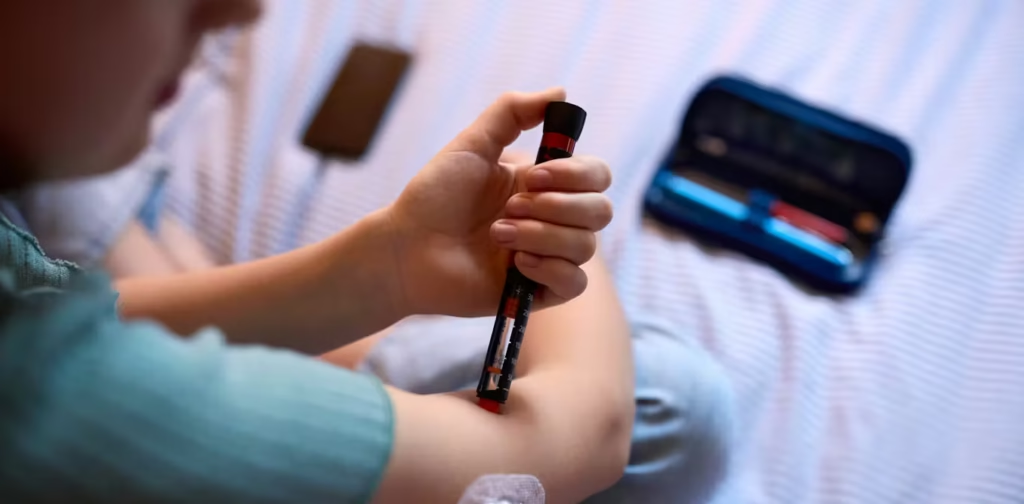
Unlike Type 2 diabetes, which is largely linked to lifestyle and insulin resistance, Type 1 diabetes is an autoimmune condition in which the body’s immune system attacks and destroys its own insulin-producing beta cells in the pancreas. Patients require lifelong insulin injections or pump therapy to survive.
There is currently no cure. Treatment manages the condition but does not address its root cause.
Other Major Medical Breakthroughs This Week
The Swedish diabetes finding was one of several significant healthcare stories published this week.
A UK-led clinical trial found that just nine weeks of immunotherapy administered before surgery kept a specific type of colorectal cancer patients cancer-free for nearly three years — results that researchers described as “surprisingly powerful.” The trial focused on a subtype of colorectal cancer with specific genetic markers, suggesting that targeted immunotherapy timing could become a new standard of care.
Separately, a major 10-year clinical trial delivered sobering news about one of the world’s most common knee surgeries. Researchers found that trimming a damaged meniscus — a procedure performed hundreds of thousands of times annually — not only fails to provide lasting relief but may in some cases worsen outcomes over time.
The Sleep-Heart Attack Connection
New research published this week also revealed a striking link between irregular sleep schedules and cardiovascular risk. A study tracking participants over multiple decades found that adults with chaotic, inconsistent sleep patterns in their 40s faced approximately double the risk of heart attack later in life — even when controlling for other lifestyle factors.
Sleep specialists say the findings underscore the importance of treating sleep regularity — not just duration — as a core component of cardiovascular health.
The Bigger Picture: Healthcare in 2026
The stem cell breakthrough arrives at a moment when medical science is accelerating across multiple fronts. Digital health startups raised $4 billion in venture capital in Q1 2026 alone — the strongest first quarter since the pandemic era. AI-powered diagnostics, CRISPR gene editing, and real-time wearable health monitoring are converging into a new era of personalised medicine.
For the estimated 8.4 million people living with Type 1 diabetes, this week’s news offers something that has long seemed out of reach: genuine, credible hope.
GlobeBuzz Healthcare covers medical breakthroughs, health policy and wellness news globally.
Subscribe at globebuzz.org.